Archive for the ‘Consumer’ Category

Why I confidently predict this recession won’t be as ‘severe’ as the last

Why I confidently predict this recession won't be as 'severe' as the last

Why I confidently predict this recession won't be as 'severe' as the last

I normally say I don’t do predictions, so you may be surprised to see me putting my neck on the line in such a way. Yet I haven’t suddenly bought a crystal ball or grown cahoonas the size of an ox, this is a natural conclusion on the back of the political spin of recession maths…

A recession is strictly defined as two successive quarters of negative growth – in other words, the economy shrinking for half a year. Yesterday it was announced we’d had one quarter down 0.2%, so even though it’s down, unless we get another one – it’s not yet a recession – but the general feeling is it will be.

Yet just think about this definition for second. A ‘recession’ isn’t about how things feel, the perception of economic affairs, it’s about whether things are good or bad. Politicians can rightly say we’re not in recession even when many are feeling the pain.

Look at this table below – I’ve designed  a ridiculously extreme example of how the definition may not reflect the real picture:


Technically not a recession year

Technically a recession year

1st quarter

Economy up 0.1%

Economy up 10%

2nd quarter

Massive crash – down 20%

Things plateau – down 0.1%

3rd quarter

Things stabilise – up 0.1%

Slight downturn – down 0.4%

4th quarter

Double dip – down 20% again

Recovery – up 10%

Total annual growth

Down 36%

Up 20%

The definition of recession also explains why over the last couple of years even though the economy has been teetering, technically we’ve not been in recession. Back in 2008 I confidently predicted that – not out of any prescience, just due to the simple maths (see my Recession will end soon: the joy of maths blog).

Why this recession is unlikely to be as severe as last time

I’ve already seen one headline of "this recession won’t be as bad as 2007/8" and indeed it’s almost certainly accurate, but quite meaningless.

Our economy contracted substantially back then and has never recovered, we’re still in the mire, we’ve just had stagnant or minor growth for a few years. Thus we’re not going to fall much now as there isn’t that far too fall – unless we have catastrophic economic collapse (let’s hope not eh?).

The fact this recession won’t be as steep isn’t the same as saying it won’t be bad. Recession is all about momentum – which is how fast things are moving, and doesn’t factor in the overall economy. 

Take a driving analogy, if you accelerate to 80 mph then slow to 79mph you may’ve slowed down but you’re still going fast.   

Yet with our economy we were travelling at 70mph, in 2007 we slowed to 60mph and aren’t going much faster now, so if we drop to 58mph now, while we haven’t slowed down as much as in the last recession – we’re still going far slower than we were when this all started.

Not everybody is struggling

If you’re reading this as a doom and gloom blog, please don’t. In many ways the message is we’re already in it, so hopefully it won’t get much worse.   

Yet even in a recession you can’t draw too many conclusions on what it means for individuals. I’ve corrected a good few interviewers in recent times who’ve asked me: "everyone is struggling, what should we do?"   

Of course ‘everyone’ isn’t struggling, there are still many with good jobs, getting pay rises, with savings, no debts, and possibly low rate tracker mortgages. You only need to see this How much are you worth? 2012 poll result to see that.

The key to recession is ‘more people than usual are struggling’, with many feeling income squeezes, costs on the up, benefits dropping and worries about job security. It’s crucial to address those issues, but still we must be careful not to start seeing our economy as a blanket of individuals with a homogenised financial situation.

Related links

Comment via Facebook login

This is an open discussion; anyone can post. Please report any spam, illegal, offensive, racist, libellous posts (inc username) to fbteam@moneysavingexpert.com

Prospective students no longer so scared of £9,000 fees

http://images.moneysavingexpert.com/images/piggybank3.jpg

Prospective students no longer so scared of £9,000 fees

I got a bit stumped on Thursday on the weekly Consumer Panel hour I do on Radio 5. The subject was the new up to £9,000 fees for new student starters in 2012, on the back of applications closing Sunday (yesterday now). There were three prospective students on, so I was poised to rebut the usual misunderstandings but each when asked said something akin to: ‘No, I’m not worried about the fees, I was at first, but I’ve done the reading on them and it’s not as bad as I thought’.  

While it left me slightly stumped on what to say; it was music to my ears. This isn’t the first anecdotal indication that the message seems to be getting out there. Those who don’t religiously read this blog (tsk tsk ;) ) may not know I head up the Independent Taskforce on Student Finance Information.

I was appointed to it not long after berating politicians that if they were going to change the system, they at least needed to explain to students how it worked (see taking on a taskforce blog). The group is independent of government and has Universities UK, UCAS and the National Union of Students, amongst others, on the core committee. The aim is to give apolitical info on how the new system will work.

With very limited resources our primary focus has been to explain how it works to potential students, their teachers and parents – rather than wider society.   

And I do think some headway has been made. Many 6th formers (or equivalents), have a much better idea of how the system works (note we’re now switching to part time and mature students as their applications close later) and seem to be less panicked about it than society in general.

Free resources

To do this, as well as having a ‘student finance day’ in November, we’ve loads of resources out there…

  • The apps: The "Uni Fees 2012" app we have for iPhones and Android.
  • Info for teachers: We’ve sent a teachers’ guide to every school in the UK, and downloadable teaching lesson plans to help teachers work through the various issues with the students
  • 6th former guide: Deliberately written to target younger prospective students with less experience of finance, the 6th formers’ student finance guide has been hugely requested by schools (as well as downloaded a lot by parents).
  • Parents guide: Often it’s parents more than their off-spring who are more panicked, so there’s also a parents’ guide to student finance 2012, which runs through the important things parents need to know.
  • Student finance calculator: This student finance calculator was built by the MSE team to help try to answer the ‘how much will it cost me?’ question.
  • 20 things you need to know: The student finance 2012 guide is my original guide that the others are based on, and hopefully it covers everything that anyone else would want to ask too.

Of course we’re not the only ones doing this – there’s official info from the Government and the Student Loans Company too – though, biased as I am, I think ours is in a different league to the more constrained messages in those guides.  

Will applications fall?

What will be interesting now, will be to see the result on applications overall. Earlier in the year they were down double digits. I hope to see that drop lessened substantially when the actual figures come out on 30 January. 

They will be down a few percent due to demographic changes and the fact some students rushed through the gates last year to beat the fee hike, but I hope and suspect it won’t be as drastic as was originally feared.  

That’s not to say every student should go to university, just that they need to understand the true cost even with the much criticised hikes in fees, not the fear laden invective we’ve seen in some newspapers trying to grab headlines. After all, if you don’t understand the cost, how can you make a rational decision on the value?

Related past blogs


Comment via Facebook login

This is an open discussion; anyone can post. Please report any spam, illegal, offensive, racist, libellous posts (inc username) to fbteam@moneysavingexpert.com

The bank deal that makes 5,000% APR payday loans look cheap

The bank deal that makes 5,000% APR payday loans look cheap

The bank deal that makes 5,000% APR payday loans look cheap


Payday loans at 5,000% APR rightly shock many people. Yet high street banks have a product so expensive many would save by taking a payday loan, even at ridiculously high rates, instead. But as banks needn’t phrase it as an APR, they get to offer this product without the nasty brand damage.

As for what this extortionate charge is – well it’s simple, common and famous. It’s a bank charge for going beyond your pre-agreed overdraft limit.

How expensive are bank charges in comparison?


Clydesdale Bank charges £25 per day for going beyond your limit. I tried to calculate this in Excel as an APR, based on someone getting a £25 charge a day for being £1 over. The resultant interest rate was TOO LARGE FOR EXCEL TO CALCUATE % APR – which means it’s a ‘figure with way more than 300 zeros after it’ percent.  

So I had to take more standard charges like Nationwide’s £15 per item or Lloyds £5-10 per day depending on how overdrawn you are (see the Bank charges comparison guide for more). 

But even here, if you got a charge for being £1 over, it was too large to calculate so I went for the following scenario…

Go £5 over your overdraft at Lloyds and get charged £5. Based on payday loan calculation rules this would be roughly: 7,500,000,000,000,000,000,000,000,000,000,000,000,000,000,000,000,000,000,000,000,000,000,000,000,000,000,000,000,000,000,000,000,000,000,000,000,000% APR.

Or, to put it another way – compare the above costs to borrowing a range of amounts at an APR of 5,000%:

Amount
Day’s cost at 5,000% APR
£1
1p
£10
11p
£50
54p
£100
£1.08

As you can see, in comparison 5,000% APR is cheap.

So should everyone get payday loans to avoid bank charges?

Payday loans are a blight on society. The rates above rely on you only borrowing for a day – in reality that doesn’t happen with payday loans, they’re designed to be had for a week or a month, so you pay an upfront admin hit anyway. 

While some could save by using a payday loan instead of getting hit by bank charges, (though not every time) what’s far better is to avoid the borrowing all together or use a host of other solutions (we’ve a full ‘what to do instead of getting payday loans’ guide coming soon).

Even expensive credit cards, often rightly thought of as bad guys, compared to payday loans or bank charges are relatively cheap. The problem with them though is the easy availability of credit which means the debts can snowball.

Banks have cleverly avoided having to phrase their charges in a nasty way

My real point here is the fact that we don’t have any form of playing field to compare. Payday loans must list themselves as APRs due to regulations – that’s not a particularly sensible system in my view (see the evidence given to the Business Select Committee to explain why) but at least it scares people off. Yet banks get away with levying relatively higher charges without the stigma.  

Just image if Clydesdale had to write ‘Bank Charges APR too high to calculate’, or many others had to write ’7,500,000,000,000,000,000,000,000,000,000,000,000,000,000,000,000,000,000,000,000,000,000,000,000,000,000,000,000,000,000,000,000,000,000,000,000,000% APR’. 

It wouldn’t exactly be good for their brand (and just think of the extra cost of advertising just to fit the figure in).

Are people going beyond their limit just taking cash that isn’t theirs?

This is an old chestnut whenever I talk about bank charges – and it’s nonsense. Banks have three limits within overdrafts:

  • The authorised overdraft – ie, no bank charges.
  • The unauthorised, paid overdraft – ie, there will be bank charges, but your cheques/DDs don’t bounce.
  • The unauthorised, unpaid overdraft – ie, there will be bank charges and your cheques/DDs do bounce.

These are just functions of a bank account – the banks don’t have to have a ‘paid’ overdraft, it was introduced to increase profitability and added over £3 billion a year to their coffers. Of course during the bank charges reclaiming height over a billion was paid back – and still now a few whose charges cause hardship can get some cash back. Yet overall it’s still immensely profitable.

Ps. Nerdy calculation note. Of course the APR calculation assumes that the charge would compound, which it doesn’t with bank charges – so the APR given is a farce. Yet it doesn’t with some payday lenders either – who don’t compound and cap the time – yet they must use the APR calculations that assume they do.

So I’m simply giving banks similar treatment in my calculations. What we need is a sensible clear measure for all – which is what I and many others have lobbied for.)

Related Past Blogs

Comment via Facebook login

This is an open discussion; anyone can post. Please report any spam, illegal, offensive, racist, libellous posts (inc username) to fbteam@moneysavingexpert.com

The financial education debate – in full

The financial education debate – in full

The financial education debate – in full

Below is a cut and paste of the Hansard transcript of last week’s debate (source: Parliament). For those wanting a quick summary see my financial education debate – who said what blog, as the transcript below came from five hours of debate.

You can also watch a video of the session.

Read the full transcript

What do I do if my MP is the Speaker?

What do I do if my MP is the Speaker?

What do I do if my MP is the Speaker?

I was slightly stumped by this question yesterday. I had tweeted asking people to take 2 minutes to write to their MP to encourage them to attend the financial education debate in the Commons this Thursday, on the back of the e-petition hitting 100,000 signatures.

This was one of the first replies I received and it got me thinking. For those who don’t know, the Speaker of the House of Commons is currently John Bercow, who is the presiding officer of the chamber, and a sitting MP. By convention the role is non-partisan and the Speaker never votes or takes sides in any debates.   

While of course this is a good idea for the man having to referee our heavily adversarial system – where does it leave constituents? They have a Member of Parliament they can’t lobby or push to engage in politics, effectively disenfranchising them from big political activity. Of course I suspect he still acts as a constituency MP dealing with individual issues, but not political ones.

While I love the history of our Parliament and the long established traditions, this is one of the areas where I think the anachronistic system needs a bit of tweaking. I often wonder what it must be like to live in a sitting PM’s constituency too – does he still do weekly surgeries? Or do you effectively lose a constituency MP?

I’d be interested in your thoughts .

Comment via Facebook login

This is an open discussion; anyone can post. Please report any spam, illegal, offensive, racist, libellous posts (inc username) to fbteam@moneysavingexpert.com

Are you embarrassed to shield your pin code when paying in shops?

Are you embarrassed to hide your pin code when paying in shops?

Are you embarrassed to hide your pin code when paying in shops?

The lady in front of me in the supermarket today had the pin code 1910. I know this because I saw her key it in. She did it without any attempt to conceal it from me or anyone else in the queue – she just stood back and blithely punched each number in.

All I would’ve needed to do is grab her card, run out the door, go to a cash machine and bazinga, £400 mine straight away. (Ok, I know it’s unlikely, it’d be a career ruining moment for me, but you get my point).

This isn’t an uncommon occurrence, I’ve lost count of the number of pin numbers I’ve seen (I do usually try and look away, but sometimes it’s too obvious). I think it’s become embarrassing for people to hide their pin codes. 

I know I sometimes feel that it’d be rude to put one hand over the hand putting the code in – you worry it may offend the shop staff or others in the queue by indicating you’re worried they’re dishonest. My own technique is instead to put all my fingers on the keys, so it’s very difficult for anyone to see what I’m pressing (I asked Mrs MSE to look and she couldn’t work it out).

So as I’ve been mulling this over, I thought I’d try and see how you feel.

  • Is it embarrassment, or is it just not thinking about it?
  • What’s your pin code technique – do you have any tricks that may help others?
  • Are you psychologically more likely to take more care at an ATM, rather than in a store (even though the end result would be the same)?

I’d love your answers, please let me know by one of the links below.

Comment via Facebook login

This is an open discussion; anyone can post. Please report any spam, illegal, offensive, racist, libellous posts (inc username) to fbteam@moneysavingexpert.com

The difference between ‘free’ and free

The difference between 'free' and free

The difference between 'free' and free

When is a freebie not a freebie? When you have to pay for it! Sounds simple, but in the real world things aren’t that clear cut. So this week we’re introducing a new site convention – the difference between ‘free’ and free.

Our forums have always been clear – we have the freebies (no spend) required and freebies (low spend) boards. The latter is for when there’s a cost associated with getting the freebie eg, you need to send off for it (stamp cost), or pay for delivery. The first means absolutely no cost.

This is a convention we’ve struggled with in the weekly email where space is a premium so from now on it works like this:

  • When it’s free

    This is where there is absolutely no cost to you. Eg, you fill in an online form or web app to get the freebie. I’ve also decided that if you need to pick it up in store then that’s in this category (even though you could argue there are transport costs – but we need draw the line somewhere).

    Example from this week’s email:

    FREE £150 insulation for ALL – here there’s no cost to you whatsoever and provided you qualify it’s a total freebie.

  • When its ‘free’

    Here we are indicating that the company fairly refers to it as a freebie, but that there may be some costs associated. I know the difference is small, but the key is we will prominently tell you about the charge anyway – so see it as part of the whole package.

    Example from this week’s email:

    ‘FREE’ £8 personalised mug (pay £2 p&p) – there is a real cost associated, but it’s the standard delivery cost only.   

    Another use of this would be last week’s:  ’Free’ up to £32 tie if you buy a £2 newspaper. While the tie itself is free, you need to shell out for the paper – so if you weren’t planning to, it’ll cost you.

In general we’ll be following that convention in the email and all new things on the site. Though there may be editorially justified exceptions. An extreme example (sadly, made-up) will help: 

Imagine a company is giving away a £30,000 Mercedes to everyone who sends a stamped, addressed envelope – we’d probably just focus on the freebie as the cost is negligible in context.

Just because they call it a freebie, doesn’t mean we will

If any companies are reading this thinking that calling something ‘free’, but manipulating their pricing means we’ll follow – they’re very much mistaken.

Often this happens with package and postage charges – they’re inflated to cover the freebie. If the p&p is disproportionately high, we’ll simply phrase it differently (as we’ve done in the past).

Eg, suppose a spectacles company said it was giving £30 glasses for free, but the p&p was £10. Provided the deal was good and worth telling people about we’d phrase it as: Get £30 glasses for £10 even if their marketing called it a freebie. 

The only problem here is when people go for these deals, what we write doesn’t match up to what they see – so we tend to have to explain it out to help.

Thoughts welcome.

Comment via Facebook login

This is an open discussion; anyone can post. Please report any spam, illegal, offensive, racist, libellous posts (inc username) to fbteam@moneysavingexpert.com

Best-buy payday loans – should MSE include them?

Best-buy payday loans?

Best-buy payday loans?

We’re in the middle of writing our new guide to payday loans (eg Wonga, Quickcash etc.) and I’d like to solicit your views. The key concept is actually to explain all the alternatives you can try before using that type of lending.

So it’ll be a big checklist hopefully providing people with alternative safer routes and options. Then we will have a section on what to watch for and how to make it as safe as possible if you do get a payday loan.

The debate

What we’re currently debating in MSE Towers is whether the guide should include best-buy payday loans (or perhaps least worst is a better view), but there’s a difference of opinion – so we thought we’d ask you.

My view – we should include the best buys

This market is now £1.9billion a year – so there are a huge number of people doing it. No matter what we do, people are going to borrow this way and while I would like hardcore regulation to protect people, it isn’t happening yet.  

Thus it’s a bit like drugs, if people are going to do it, we should ensure they are safe. Here are my reasons:

  • It gives us a chance to dissuade. Hopefully our best-buys will get search traction and then we can at least get the counter arguments and warnings in.
  • It’s mostly a bad move, but not 100% bad. Most of the time it’s not a good move, but a few times it is. Sadly there are few alternatives to cheap short term borrowing – and there are worse culprits out there. For example, if you could borrow £100 for a week to stop you getting Clydesdale bank’s £35 a transaction bank charge, and repay on time, it’s much cheaper.
    (Interesting isn’t it? We demonise payday lending but not bank charges, which are even worse for some than the 5,000% rates advertised).
  • There are big differences between the best and worst. Not all lenders are the same, so helping people choose when it’s right for them is worthwhile.
  • Parliament wants this. I was giving evidence to the Business Select Committee on Tuesday and one of their points is about helping people choose if they are going to do it.
  • We can factor in the safest ones. If we did it we wouldn’t just look at cost, but we’d also look at rollover policies, whether companies report loans to credit rating agents (a good thing as it helps prevent irresponsible lending) and most importantly their attitude to people who get in trouble.

    For example, very few payday lenders co-operate with non-profit debt advisors like CAB and CCCS, making it difficult. We would try and show which lenders do co-operate – so if you got in serious trouble you know they’d behave reasonably.

MSE Wendy and MSE Alana’s arguments against:

Rather than putting the counter point myself, here are MSE Wendy and MSE Alana’s worries about it:

By including specific company names in the guide people may think we approve of the companies mentioned and even with the warnings, people could see this as an active recommendation.   

There’s also the issue that there are enormous numbers of small local payday lenders across the UK, so we could only include the big ones in the best-buys.

What’s your view?

PS. We don’t intend to use any affiliate links (links that pay the site) to payday lenders – see how this site is financed.

Past related blogs

Comment via Facebook login

This is an open discussion; anyone can post. Please report any spam, illegal, offensive, racist, libellous posts (inc username) to fbteam@moneysavingexpert.com

Ditch prepay meters for free and let MSE switch for you: ideas given to Chris Huhne

Ditch prepay meters for free and let MSE switch for you: ideas given to Chris Huhne

Ditch prepay meters for free and let MSE switch for you: ideas given to Chris Huhne

I had a meeting with the Energy Secretary, Chris Huhne, yesterday morning. The Government’s big plan is to ‘check, switch and insulate’, and as we’ve been telling people that for years, MSE Archna and I went in with suggestions and ways we could help.

This meet came about on the back of the Energy Summit, (see my PM if prices don’t fall, this summit will be deemed a failure blog) and I was pleased it felt far more constructive. The minister seemed interested in gathering ideas and keen on genuinely checking out the feasibility of them. Here are some of the main things we suggested (it’s relatively scrappy as I just banged these notes out after the meeting).

  • Collective switching for the elderly and others.

    Our system is predicated on ‘keep switching to save’. That’s fine for the information enfranchised, web using audience (see the Cheap gas & elec guide for how to do it!). Yet where it falls down are those who are scared or unable to switch. Whether this be the elderly, or simply people without time, or those who are unsure of what to do.

    We discussed the concept of a ‘collective switch’. People would give their consent for an organisation – whether it be Age UK, MoneySavingExpert.com, a comparison site or another organisation, to be their switching agent. Then when appropriate, that organisation would mass switch everyone (probably via a mass negotiated collective purchase) – in an ongoing service.

    This is something Consumer Minister Ed Davey is looking at the bigger picture of – I’ve spoken to him about it before. Yet as I said yesterday, the problem is there needs to be clear guidance from the Government and a legal ability to switch people over rather than dealing with complex contract issues – and a discussion of what liability the switching organisation would have. 

    While I suspect it wouldn’t mean everyone always getting the perfect deal – both due to the rapidity of change that’d be needed and the unwillingness of big energy companies to agree to super-cheap tariffs for so many – I still think you could keep people in the bottom 10-20% of prices with this system (back of the envelope thoughts).

    We agreed to hold a further meeting on this (with others invited) to discuss how do-able it would be and what the barriers are. While it’d be a departure for MSE this is exactly the type of thing I think the site is in a perfect position to do – and it would help many people.

    Of course though there are costs for any organisation running it (and an opportunity for enterprise) but I suspect they’d be smaller than comparison site referral fees, so may overall take costs out – not done accurate study of that though, so its only back of the envelope.

  • Free credit meters for those on prepay. 

    The fact that some prepay customers have to shell out up to £200 to get a ‘credit meter’, (ie, a normal meter where you’re billed after use) which then gives access to more competition and cheaper tariffs, is a huge barrier (some can do it free though see our Cut prepay energy bills guide for help now).

    A simple suggestion we made was that provided customers pass the credit check, they should be allowed to switch to a credit meter for free – but a fair price can be recouped if they leave that company within six months. This would overcome the cash-flow hump that blocks many moving to cheaper bills.

    The minister did reply by asking if we could take it a step further and simply move people who qualified over automatically. My thought was that wouldn’t be good as a few people do still prefer prepay for budgeting purposes even though it’s not cheapest. Yet a letter offering it to all customers would work. In the long run it should be easier once smart meters are introduced anyway.

  • When you switch they shouldn’t be able to raise prices for 6 months.

    This wasn’t our original suggestion, it was mentioned at the summit, but I think it’s a corking idea. One of the big switching problems is people tend to switch when one company has hoicked prices – yet they often move to a company who then follows suit. This rule would stop that happening and stop sales staff saying "we haven’t put prices up" to sell deals, when they know full well it’s likely to happen soon.

    The alternative view being considered is a "transfer window" when companies can only shift prices twice a year.

  • Lockdown on the differential between tariffs.

    The biggest problem with energy is we want people to ‘switch and save’, yet this punishes those who don’t. For example, one customer would pay £1,000 for energy that someone else pays £1,350 for. It’s a wrongful penalty for ignorance, apathy, fear or a lack of ability.

    For me that makes it a failed marketplace. So I mooted the consideration of a differential cap – ie, a maximum 15% between the most and the least expensive. Of course the worry is they’d simply ditch the cheap deals at first, yet in the long run, simplified tariffs are what most people want (see the simplified tariffs poll results).

  • Tips not from the energy companies.

    There are many reasons people don’t switch (see my Note to energy minister: it’s not just laziness that stops people switching blog) and are on the wrong tariffs. One of the energy summit actions was that energy companies would write to customers suggesting they switch to direct debit.

    Yet who believes their energy company? Won’t that just be chucked in the bin as more direct mail spam? So we suggested we do a ‘ten tips for all customers’ that’s branded by us and (if they’re willing Which?, Consumer Focus, Age UK etc) and the Government to ensure everyone knows the crucial info about how to cut bills.

    This would include such things as "you won’t save, but you will pay less than you would’ve done." For me this is what puts many people off. They’ve been burnt by being told they’ll save by switching but their bills don’t drop. That’s because when prices are rising, what switching actually does is stops the price going up (ie, if bills are up 20% and you save 20% it puts you back where you started).

    This type of info on helping people to switch and on where to get free insulation, all from combined sources that are there to help, may actually do the trick.

Those were the big points from the meeting, though it was a long discussion and lots of other things were mentioned. I’d love your thoughts.

P.S. The best bit of the meeting was when the lights dimmed, as it seems true to cause the Department of Energy and Climate Change (DECC) offices have energy efficient motion sensor lights: cue Chris Huhne waving his arms above his head mid-meeting.

Comment via Facebook login

This is an open discussion; anyone can post. Please report any spam, illegal, offensive, racist, libellous posts (inc username) to fbteam@moneysavingexpert.com

“I’ve had terrible service, why do you still recommend those b*****ds?”

"I've had terrible service, why do you still recommend those b*****ds?"

"I've had terrible service, why do you still recommend those b*****ds?"

This type of message isn’t rare. We often get people emailing, tweeting or facebooking us with things like this. The other day it was over a telecoms company, a gentleman had received hideous customer service, was angry and demanded we drop the company from our guide.

Yet if we stopped mentioning every telecoms provider (or most companies for that matter) that someone had had abysmal service from we wouldn’t list any. Of course while we’re sympathetic, it’s not fair or practical to start deciding a policy from one person’s nightmare. When you have 10 million users, we have to look at a bigger picture.

For almost every company we see scores of complaints and equally scores of thank yous. To try and quantify this, in some areas these days we do regular customer service polls, which we publish to help people make their mind up. Interestingly the company this person complained about has a better than average feedback– with over half of its customers who voted rating it as ‘great’.   

But this gentleman was angry and furious that we wouldn’t remove it even though, as he’d exhausted all other routes, we offered to intervene for him and push for a solution.

It’s one of the reasons I have a site rule that we usually focus primarily on the rate – because service is just too subjective. Unless there’s a widespread and obvious problem that means the entire service is sub-standard, (like TalkTalk when it launched) we don’t remove it (though with our polls we do try and give the info as a choice).

Let me use First Direct as an example

To move it away from that specific complaint, let me use the example of First Direct. It has come overwhelmingly top for customer service EVERY time we’ve done a poll for our best bank accounts guide. 

It has 93% great rating, 5% ok and 2% poor – the best rating for any company in any of the guides we do service polls for. Yet that still means 1 in 50 customers rate it poor. I do remember someone stopping me once to tell me a First Direct horror story and how they’d never use it and we shouldn’t include it.

And that’s the problem, circumstances are individualised. I suspect it’s one reason there’s no CustomerServiceExpert.com as there’s no form of homogeneity. I’d be interested in your thoughts (below) in how we should balance the individual case versus the mass feedback. 

Comment via Facebook login

This is an open discussion; anyone can post. Please report any spam, illegal, offensive, racist, libellous posts (inc username) to fbteam@moneysavingexpert.com

Travel money rip off – what the OFT needs to do

Travel money rip off – what the OFT needs to do

Travel money rip off – what the OFT needs to do

The entire ‘paying abroad’ industry is under scrutiny. A Consumer Focus super complaint on the subject, means the Office of Fair Trading (OFT) needs to give its view on unclear charges and how they work. We were asked to submit our view, so here’s what we said (mildly edited and in a less formal form)…

Using debit, credit or prepay cards overseas

Foreign currency costs are a secondary consideration for most consumers when choosing credit cards and current accounts.

For this reason we suggest to our site users that the best-practice scenario is to use a credit card prepaid in full, that is used specifically and only for holiday use – chosen for its overseas fees.

There are a number of specialist cards that have low overseas fees (though they are not very good for UK spending) and can be used this way (see the Top overseas plastic guide).

Yet overall, the lack of transparency makes comparing and consumer choice extremely difficult.

    i. If a debit, credit or prepaid card adds a foreign exchange loading, that must be broken out in statements

    The foreign exchange rate charged on plastic contains a cost most providers keep hidden. The loading is an extra fee of up to 3% on the exchange rate of the day, which effectively means card companies charge for using foreign currency (so, spend £100 worth of euros and it costs £103).

    The fact most companies don’t include this on both debit and credit card statements means many consumers are unaware it’s being charged and that they may be able to cut the cost by using other plastic.

    Where the loading fee does appear independently on statements, there is usually little description, if any, leaving it unclear what the charge is for.

    We propose all loadings must be broken out on statements for each payment and indicate both the cost in pounds and percentages.

    ii. The exchange rate used by debit, credit and prepaid cards must be published and available each day

    While most cards base their exchange rate on the Visa and Mastercard wholesale rate, not all cards do. Some use their own rates (akin to trackers and standard variable rates in mortgages) and few publish which rate they use.

    This makes exchange rate comparisons difficult, even for those who know what a loading is. Therefore we would propose that the exchange rate used must be published in a summary box as well as the loading.

    If the exchange rate is not the Visa/Mastercard wholesale rate, the card company must publish the rate being used each day on its website – alongside the Visa/Mastercard rate to allow ease of comparison.

    iii. Foreign currency withdrawals should not count as cash withdrawals

    On all credit cards and some debit cards (full list on travelmoneymax.com) the purchase of foreign currency isn’t always treated as a UK transaction and is often considered to be a cash withdrawal, incurring an extra fee of around 3%.

    Many consumers aren’t aware of this and of the fact that it results in them having to pay higher charges than if they simply withdraw cash from a UK ATM on their debit cards and use that to pay for the foreign exchange. This anomaly needs to be corrected.

    iv. Lack of warning about credit card cash withdrawal interest, even if the card’s repaid in full

    Spend on most credit cards and repay in full and there’s no interest. Yet if you take cash out, most cards do charge interest even if repaid in full. This is particularly a problem for overseas spending as it’s often the only time people use their credit cards for cash.

    Consumers are not aware of this fact, or the majority would be more likely to pay in full at the earliest convenience to save on unnecessary interest costs, and providers do not go out of their way to warn their customers about the consequences of taking cash out on a credit card or paying for currency in this way.

    We think this should be relatively straightforward to rectify.

Foreign currency sales in the UK

    i. The nonsense of commission free offers

    The phrasing used by most foreign currency retailers also concerns us. ‘Commission free’ offers mean little when it is simply paid for by increasing the spread of exchange rates.

    While this may be more of an issue with the financial capability of today’s travellers, too many consumers are led to believe that 0% is the best option when it is just one of many elements to be factored into a decision.

    Companies should not be allowed to advertise on commission alone without warnings that this does not mean people are necessarily getting a good rate.

    ii. Bureau de change transactions must be regulated and safe

    While not covered by this investigation, by far the most pressing concern over bureau de change providers in this internet age, is safety of the cash used. This applies especially where money is held by a currency provider eg. buying in advance.

    In this case, as happened with Crown Currency Exchange in 2010, if an organisation becomes insolvent consumers have no protection and any money held by is lost. As long as this remains the case consumers will be more likely to use the main high street banks or the Post Office for their travel money needs, which results in restricted competition and a lack of consumer choice in the market as smaller operators are not able to survive, except for a few local specialist dealers.

    We believe a review of the regulation of bureau de change safety and consumer protection is therefore necessary.

Those are our views, your thoughts and discussions on this are most welcome below.

Comment via Facebook login

This is an open discussion; anyone can post. Please report any spam, illegal, offensive, racist, libellous posts (inc username) to fbteam@moneysavingexpert.com

The Eurozone crisis has little impact on you, but a lot on us

The Eurozone crisis has little impact on you, but a lot on us

The Eurozone crisis has little impact on you, but a lot on us


Today’s Eurozone news is bleak. The Greek government’s in turmoil, European interest rates have been cut. It is a genuine financial crisis. Unsurprisingly, the question I’m often being asked is: "What does it mean for me?" So I thought I’d try and give a simple answer.

The impact on individual’s finances is limited

For most individuals in the UK the actual direct impact is negligible. Very little has changed. The markets are a worry for those with pension funds, but actually the market is up slightly compared to a few weeks ago. Even without this, it’s only a paper loss unless you sell. Though for those nearing retirement it is a worry – as it’s a big decision deciding when the right moment to convert a pension to an annuity is (see the Annuities guide).

The real impact is for ‘us’

That’s why the real worry isn’t for you, but for us collectively, our economy as a whole. While we’re quite removed from Greece, the nightmare scenario is a domino effect (the game, not pizzas) that could sweep across Europe and eventually topple on us too.

That would have a hit on the real economy, at best, further effecting jobs, salaries, the ability to borrow and stability, and at worse putting our entire financial system under threat of collapse (if you have savings it’s worth double checking the Are my savings safe? guide.)

Yet if I were looking for a bright spark amongst the overwhelmingly black sky, if we are heading for a recession, it’s likely to result in lower demand for oil, so energy and petrol bills could drop on the back of it. Plus of course, specifically with the Euro weakening, it means things will be cheaper for those who go abroad.

So that’s my view in a nutshell, though remember my specialty is personal finance, not economics. Is there anything I’ve missed?

Comment via Facebook login

This is an open discussion; anyone can post. Please report any spam, illegal, offensive, racist, libellous posts (inc username) to fbteam@moneysavingexpert.com

There are more savers than debtors

There are more savers than debtors

There are more savers than debtors

With all the talk of the nation’s finances creaking (or crashing depending on where you read it) it’s easy to think everyone is mired in debt. This week’s site poll belies that though, with 54% net savers, to 41% net debtors (and 5% in the middle).

Now some may be shocked at this, especially as it’s a MoneySavingExpert.com poll, and many assume our users are primarily in trouble. Actually that’s a common misunderstanding about the site demographics – we tend to closely map the make-up as internet users in general – rather than favour any group. After all some come as they need help, while others enjoy saving money and are good at it, hence having cash.

The poll excludes mortgages

It’s important to note this site poll (view the latest results) did ask people to exclude mortgages and student loans, as I thought it would be a fairer measure of the state of the nation.

Mortgages are a form of investment debt that results in an asset and offsets the necessary cost of housing – though of course there will be some who have a big struggle with covering their mortgage debts. Student loans can’t really be included as you only have to repay it if you’re earning – so it doesn’t hang over you (and currently most shouldn’t try to repay more quickly than they need to – see Should I pay off my student loan?).

Of course, there are people who have both savings and unsecured debts – for a few who are savvy, this is fine if they’re stoozing. Yet for many it’s an absolute waste of cash – what’s the point of having debt on a credit card at 20%, just so you can say you’ve some savings which are only at 3%. Most should simply pay off debt with savings.

However, I think we will re-run this poll without the exclusions in a month or so to see how the two compare.

Far more big savers than big debtors

At the extreme ends the stats are even more polarised. A quarter of respondents have over £25,000 saved (and 8% over £100,000), compared to just 8% with over £25,000 debts (2% over £100,000). 

For those with jaws dropping open wondering where on earth all these supersized savers are, I suspect there’s a big age differential going on here. Some older people who are mortgage free, can build savings relatively quickly. Others will have taken the 25% tax-free lump sum from their pension fund and are sitting on that.

In fact, I once heard a note that there are six times more savings accounts in the UK than debt accounts. Though I’ve no idea if it’s substantiated (and of course there are more iterations of savings, e.g. multiple cash ISAs, than debts).

A democratic recession – hitting both savers and debtors

It’s worth noting both groups have been hit by this recession. Of course everyone is affected by rising prices and the necessary squeeze on disposable incomes – though of course the less income you have the more disproportionately hard rising fixed costs like energy, petrol and food hit you.  

Also, while lower interest rates should’ve benefited those in debt, the credit crunch means while best-buy rates are lower, lending criteria has tightened like a noose, meaning it’s difficult for many to cut the costs of their existing debts – leaving interest rapidly accruing.

Yet savers too have been hit, with interest rates limboing substantially under the prior two hundred year lows. Worst still, the net effect of high inflation and low interest rates is that many savings are in reality losing’s, as the spending power of the money in them is shrinking (one reason why repaying a mortgage with savings, then finding the top savings deals are so popular).

PS. This blog was written after just over 9,500 poll votes, though the poll is open for a few more hours, so the exact percentages may change slightly.

Comment via Facebook login

This is an open discussion; anyone can post. Please report any spam, illegal, offensive, racist, libellous posts (inc username) to fbteam@moneysavingexpert.com

A blog in support of stupid people’s rights (probably the most important blog I’ve ever written)

A blog in support of stupid people's rights (probably the most important blog I've ever written)

A blog in support of stupid people's rights (probably the most important blog I've ever written)

I’m receiving a growing creep of messages like, ‘if people are stupid enough to (insert issue) it’s their own fault’. But is it? If people are genuinely stupid, is it really their fault – should they not be protected too? And what about dyslexics, those with mental health issues, those suffering with senility, the blind and more – do they all get what they deserve too…?

Last night I was on Watchdog, while the majority of people were supportive of my piece, here’s two Tweets that weren’t…

Shove your ‘Mini-Armchair Revolution’ up your arse. People should pay attention to what they are doing. Idiots!"

"I’m sorry but if someone is stupid enough to sign up for something they don’t need then it’s their own fault!"

In fact it wasn’t about ‘signing up’ that was the point, it was on online travel companies who pre-select expensive travel insurance as added extras leaving many paying by default. This specifically contravenes EU auto-add on laws and leaves many paying twice, as they already have annual travel insurance.

More surprising though, were the comments that came through. On air I’d noted these schemes were cleverly designed to make you sign up and were especially dangerous to those unfamiliar with the web, dyslexics or dyscalculia sufferers.   

The ‘mini armchair revolution’ bit is a phrase I used to encourage people to take any add on travel insurance issues to the Ombudsman to try and get a precedent ruling against the practice – see the MSE news story, Had travel insurance auto-added? Make a compensation claim.

This isn’t the first time I’ve had similar comments, it has plagued some of the biggest campaigns I’ve been involved in – for example when hearing about PPI reclaiming, I’ve had, ‘why do these people who were stupid enough to sign up get the payout? What do I get for not signing up?’ 

On bank charges, lots of people said, ‘anyone running up thousands of these penalties must be stupid’, even though the system is designed to entrap people in serious debt.

The list of ‘stupid’ people

So it’s worth thinking about just who these people being accused of stupidity really are. Below is my non-exhaustive list of those who struggle with all these various issues – and therefore according to those who message me are thus stupid and don’t deserve protecting.

  • Mental health suffers - 1 in 4 people in the UK suffer at least one mental health problem each year, and may therefore be temporarily incapable of making decisions.
  • The blind / partially sighted (when using sites not optimised for their needs).
  • Those who are Dyslexic
  • Those who are Dyscalculic
  • Non-English speakers - People who don’t have English as a first language.
  • The learning disabled
  • The functionally illiterate
  • First time web users
  • Alzheimer’s or senility sufferers
  • Sleep deprived parents of very young children
  • Those with short attention spans – Some people with medical conditions suffer from limited concentration.
  • Mental capacity issues
  • Financial phobics
  • First time consumers – Young people who are only just transacting for the first time.
  • People worried about other things - Minds can be distracted, perhaps due to stress, or maybe in the rush to book a flight to see a relative who’s only got a few days to live.
  • Those who don’t read every term and condition - Sometimes there are over 5,000 words of legalese, anyone who doesn’t check them…well – just stupid I suppose?
  • Those who trust banks – For example those who were told PPI was compulsory and therefore took it out as they thought they had to.

Of course the people in this list are far from stupid – and its offensive to call them that. Many are very bright, high achieving people – some aren’t. Yet all of whom may be caught out at one time or another. And that’s what I find so infuriating about the comments I receive. Its a bit like the quiz shows that say ‘its easy when you know the answer’. We all need to walk in other (wo)mens shoes before we throw such accusations of stupidity around. 

I simply don’t get the venom of some who aren’t caught out towards those who have been. Thankfully I’ve never had a bank charge, didn’t get PPI, never has debt problems, and never been trapped by added insurance, but I don’t feel we should leave those who have to suffer.

Of course people must take responsibility for themselves

This isn’t about regulating for the lowest common denominator. My philosophy is still the ‘adversarial consumer society’ which says a company’s job is to make money from us, our job is to try to keep that cash.

So we can’t expect credit card lenders to police responsible borrowing, their job is to flog debt. Instead we must try and be responsible borrowers to protect ourselves. We can’t expect energy companies to keep us warm, their job is to make money for their shareholders, we need to ensure we’re on the best deals.

Yet who protects those who can’t take responsibility for themselves?

Perhaps where I’ve changed since I first started out with the purist view above, is having a growing realisation of the large number of people who permanently or temporarily aren’t capable of taking responsibility for themselves. At that point surely we must expect our politicians and regulators to ensure fair play and options for redress when people are taken advantage of?

Products must be transparent and fair. If I sign up for a holiday online and travel insurance isn’t automatically added, but it does ask me if I want it, then that’s fine. But that doesn’t mean every product needs to super simple. In our complex world sometimes products, especially financial ones, need to mirror that – yet then fair warnings and fair dealings must be mandated.

Of course drawing the line on this isn’t easy. I attended the energy summit earlier this week. The Government’s big call is to switch, as so many people are on the wrong tariff and overpaying their provider. So you could say ‘the energy companies must auto-switch everyone to the cheapest deal’, but for me that’s a tough call – is it too much interfering in competition?

Or the next step along, should we ban 0% credit cards due to the high ‘go to rate’ it jumps to afterwards? Here I’d say that’s a step too far and would damage those getting vastly reduced interest rates in the mean time (and not necessarily help others as they’d be on high rates anyway). Here what’s crucial is how it’s communicated and reminders should be sent before the 0% ends.

So, if I were to try and draw the line I’d perhaps say we must stop activities that entrap people into getting things they don’t want or aren’t aware of, by deliberate manipulation or confusion.

I’d love know your thoughts below.

Comment via Facebook login

This is an open discussion; anyone can post. Please report any spam, illegal, offensive, racist, libellous posts (inc username) to fbteam@moneysavingexpert.com

‘Prime Minister, if prices don’t fall, this energy summit will be a failure’

'Prime Minister, if prices don't fall, this summit will be a failure'

'Prime Minister, if prices don't fall, this summit will be a failure'

There was an elephant in the room at yesterday’s energy summit. So when I got my chance to look in the whites of David Cameron’s eyes I mentioned it: "Prime Minister, if bills don’t come down this winter, the public will see this summit as a failure."

He nodded like a man who knows he’ll bear the brunt if some choose between heating and eating this winter. After all, if I’m being swamped with Tweets on it, I suspect constituency mailbags are jammed too.

At a typical £1,300/year gas and electricity is a far more tangible problem for UK voters than the Greek crisis. Yet don’t hold your breath for price cuts, although most energy companies will freeze prices this winter, which may help a little if a long cold spell pushes demand high. Then again, after two price hikes in the last year, it’s cold comfort.

Ultimately rich energy tarts like me who play the system, pay £200-£300 less than those who are poor, scared, disenfranchised or confused. 

The easy fix is to force firms to cut all standard tariffs, but the political cojones aren’t there to push up against the big six providers and make that happen, though plans to simplify tariffs may reduce the difference in the long run.

Instead, right now Energy Minister Chris Huhne wants people to switch and save. And in lieu of prices cuts, the Government’s new Check, Switch and Insulate campaign is EXACTLY the right thing to do.

Then again I would say that, I’ve been yelling for people to do it for ten years now – so seeing the politicians pull this from the hat as the grand fromage solution at this highly publicised summit was frankly, slightly depressing.  

Plus, as I explained to the meeting, you can’t just say ‘switch’, as too many have been burned in the past due to issues like…

  • Mistiming. Too often politicians and regulators urge people to switch once a big company’s announced price hikes. This is actually the worst time to switch, as the company you switch to follows suit and hikes its prices the next week. Instead it’s best to wait until all the big firms have hiked prices so there’s a level playing field for comparison (like now – it’s currently  the PERFECT TIME to switch).
  • You gain not save. When prices are rising 25%, if you save 20%, you still need to shell out more than before, even though it’s £100s less than you would’ve done otherwise. Unless this is explained, when people switch and find they’re paying more, they think they’ve been diddled.
  • Catch up kills cash-flow. If you owe anything to your existing provider when you switch, you still need to pay it. While this doesn’t increase costs, it can be a cash flow nightmare

 See more issues in my Why people don’t switch blog.

Any campaign must tackle real world problems like these, as well as follow through on plans to speed up transfers and block price rises after switching for six months.

Even so, right now the big call has to be COMPARE NOW to see if you can gain £100s, (see how at www.moneysavingexpert.com/gaselec ) and why not speak to elderly relatives who are less likely to switch and help them too. Plus many are also eligible for free insulation.

Finally, spare a moment for the big energy company boss who made an emotional appeal that we must all work together to help energy companies be trusted again. I may’ve upset him when I said I’d tell consumers NOT TO trust their energy company. After all, with some customers paying £100s more than others for the same thing and Which? showing call centres are giving out incorrect tariffs, surely before we trust them, they need to become trustworthy.

Related info:

Comment via Facebook login

This is an open discussion; anyone can post. Please report any spam, illegal, offensive, racist, libellous posts (inc username) to fbteam@moneysavingexpert.com

What I’m going to tell the PM at today’s energy summit…

What I'm going to tell the PM at today's energy summit…

What I'm going to tell the PM at today's energy summit…

I’ve spent this morning thinking, reading and making points for this afternoon’s energy summit. It’s hosted by the PM and Energy Minister Chris Huhne, and the big six energy providers, regulator Ofgem and a few consumer groups will be there.

The meeting is a closed meeting, so I’m not supposed to divulge what’s said, in order to aid open discussion. So I thought why not publish my notes in advance of going. These are a mix of my provisional thoughts and your feedback on the PM’s article on energy, which we published on the site this morning.

They’re very scrappy, short-hand personal memory cues (in no particular order – I’ll prioritise later) so I hope you’ll get the gist…it’s worth noting quite a few of the simplicity measures have already been proposed. Yet I think tackling the barriers to switching and getting faith back in the system are priorities.

  1. People have little faith in this summit. This cannot just be a talking shop. We need to see real, concrete, immediate action taken on the back of it.
  2. Winter is coming. Prices need to come down now, full stop. £1,345 per year average price is too high. Wholesale prices have dropped, so energy companies need to cut prices – there is huge anger in their high profits and our high bills. The PM needs to deliver reductions.
  3. Switching needs to be easier and quicker, and to work – too many are put off by the process. Many worry about cash flow, as by switching they’ll need to meet any debt hangover there and then. Plus there are many barriers still in place.
  4. After the terrible decision to shut Consumer Focus, who will regulate comparison sites?
  5. There needs to be price certainty when you switch, for example the price given at that time should not be allowed to rise for a set period – e.g. 9months or a year.
  6. Need to incentivise owners of rental properties to insulate and be more energy efficient.
  7. End to doorstep sales – it has hindered, not helped and it annoys people, although at least energy companies should now obey no cold caller signs unlike others companies.
  8. We need to get people to focus on their tariff, not their company. Tariff names need to be more distinct from each other to stop confusion.
  9. People want LESS choice. There is overwhelming support to get rid of confusing tariffs, as seen in our poll results (see the Should we simplify tariffs? poll result). Confusion marketing by the industry has shot itself in the foot.
  10. Decent compensation should be given to those who’ve been mis-sold in the past (see the Energy mis-selling guide). There are also a lot of disaffected people who just miss out on warm home discount and don’t qualify. Many working families on low to mid incomes are being slapped across the face by high costs.
  11. The Government and the regulator need to smarten up – yelling ‘switch’ at the wrong time leaves people burned. NOTE: my press release comment on the PM’s statement is…

    "Past behaviour from all parties, and the regulator, has shown they don’t understand the real world of bills. They need to get more sophisticated.

    "I’ve lost count of the times I’ve heard them yell ‘switch’ when energy companies hike prices. Swathes of consumers are burned as a result, as they move from the frying pan to the fire as their new provider hikes bills too.

    "After such an experience, many won’t switch again. In fact, the time to compare, switch and save is later, once all companies have increased prices (as they have now) so there’s a level playing field and you can see who’s truly cheapest." PS. If you haven’t done a comparison do one now, see the Cheap gas & electricity, plus cashback guide for more info.

  12. Why do lower users pay more for units? The discounts for high usage ‘push’ behaviour the wrong way.
  13. Direct Debit and price confusion – needs clarifying how DD will be set. People need to be encouraged to give readings – smart meters when introduced, should help.
  14. Language of ‘savings’ leads to disappointment in the market – as bills may still rise, just not as much. People gain from switching but they don’t feel or realise it. This needs to be tackled as it’s one of the reasons for disenfranchisement in the system.
  15. It’s about time home heating fuel got some regulation too.
  16. Prepay customers are still 2nd class energy citizens trapped on higher bills. While it has improved, it’s still not enough. The rental legacy issue is a problem, as is the cost of switching to a credit meter even when your credit score is good enough.
  17. Comparison sites coming up with different answers doesn’t help the trust – needs more work to ensure that this adds up.
  18. Need to encourage phone based switching for older people, so they don’t have to go via the internet.
  19. Annual statements launch was farcical. Why not just make bills clearer and force providers to list what tariff you are on along with a summary box on exit penalties, when any discounts change, when you last switched and whether any lower rate tariffs exist?
  20. We need more insulation and energy efficiency initiatives delivered directly. Plaudits to British Gas for its insulation scheme and the fact all customers with dual fuel get it – not just a limited tranche.

Strong notes from users

  1. People don’t believe competition has worked, calls to renationalise.
  2. General view is that energy companies are profiteering.
  3. Some say why have a go at energy companies for huge profits, when an even bigger chunk is made up from tax.
  4. Lack of competition with only six main suppliers in a vertically integrated market.
  5. Big added costs to our bills, which only result in companies giving away a glut of free energy saving light bulbs isn’t good for anyone.
  6. Public worry that big green energy investments will push up prices – many are unhappy about this added chunk on bills. In a rough spot Facebook poll this morning 3 to 1 favoured prioritising low bills rather than green investment.

I’m disappearing off soon to go to the meeting, but I will try and glance at any comments below beforehand.

Comment via Facebook login

This is an open discussion; anyone can post. Please report any spam, illegal, offensive, racist, libellous posts (inc username) to fbteam@moneysavingexpert.com

Amazon Kindle – probably the best customer service in the world

Amazon Kindle – probably the best customer service in the world

Amazon Kindle – probably the best customer service in the world

I’m never slow to berate when service is bad, so it’s important to applaud when it’s superb – and the service I’ve just had from Amazon is just that…

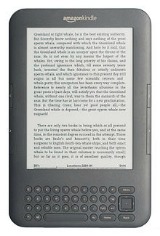
In May Mrs MSE bought me a Kindle for my birthday, and I must admit I adore it (and her), I’ll never go back to paper books again (see the Cheap Kindles guide if you’re considering one).  It’s given me the joy of buying e-books costing less than 99p as a risk, and I’ve discovered some gems as a result of it.

Heavenly service

Now, just in case anyone carps that my experience was due to ‘being on the telly’ – it’s not, the account isn’t one you could relate to me at all – plus a member of my team has had an identical joyous service experience.

A couple of weeks ago my Kindle had a glitch. The right hand cursor key kept depressing even when not held down. This meant as I tried to read, it’d keep forwarding to the next chapter, making it impossible to use.

As Mrs MSE had bought it, she called up to sort out getting it fixed. After five minutes on the phone they agreed to send a new one out to be delivered THE NEXT DAY.

It duly arrived, already logged in and registered to my account. All my books were already on it archived, and all I needed to do was click to download them again, at no charge, and it was as if I was on the same machine.

To top it all, they then arranged to come and collect the old one.

Of course it wants a Kindle in your hand

Amazon service is generally pretty good anyway, but I suspect the reason it’s exceptional with the Kindle, is the same reason that the Kindle isn’t that costly its designed as a vehicle for Amazon to sell you books.  

The real profit comes from the onward sales – continued loyal purchases from the Amazon bookstore (thankfully in my experience currently the books tend to be relatively cheap compared to other paper books and e-books).

Therefore it’s in its interest to keep a Kindle in your hand, especially if you’ve got a decent purchase record. That shouldn’t take away from the fact that I wish all customer service was like this.

Related links:

Amazon Discount Finder
Cheap Kindles

Comment via Facebook login

This is an open discussion; anyone can post. Please report any spam, illegal, offensive, racist, libellous posts (inc username) to fbteam@moneysavingexpert.com

Can you use payday loans to boost your credit rating?

Can you use payday loans to boost your credit rating?

Can you use payday loans to boost your credit rating?

Payday loans are the fastest growing lending type on the market. Even though they’re often 4,000% + APR now they’ve hit people’s consciousness, some are using them for far more than for just borrowing – with some seeing them as a way to boost their credit rating – but will it work?  

This all started on my Thursday Consumer Panel slot on Radio 5 yesterday. I was talking about credit ratings, when I was asked:

Can you use a Wonga loan to boost your credit rating?"

I passed on answering, as it’s not something I’d checked out in detail. Yet it must be a trend, as walking into the Daybreak studio this morning I overheard one security guard advising another to get a payday loan for just such an event. 

Payday lending and credit scores – the facts

So, having done some checking (thanks to James at Experian) and thinking, let me first layout out the key facts.

  • Payday loan applications do go on your credit file. When you apply for a payday loan, the application usually goes on your credit file. When you pay it off also shows up.
  • Repaying on time is likely to be slightly positive. There are no hard or fast rules when it comes to credit scores. Each lender scores you differently based on its own wish list of what it views as a profitable customer (do read the full Credit Rating guide for a comprehensive explanation).

    Credit scoring works on ‘behavioural predication’, in other words they use the way you’ve acted in the past to predict your likely future behaviour and thus calculate whether they’ll make money from you.

    In general paying off credit ON TIME shows you’re more reliable, therefore this will have a very minor impact.

  • In future it may be slightly negative. Currently your credit reference file DOESN’T indicate the fact it’s a payday loan when other lenders check it – just that it’s a loan (and likely of a relatively small amount).

    Yet plans are afoot for credit files to differentiate between payday loans and others, so providers will be able to see the type of loan it is.

    As payday lending is aimed at those with cash flow, money management or just general low income issues – it is possible that some lenders will add a slight negative score once they know it’s a payday loan, even if you repay in time.

    Now I need to stress this has not happened yet, but it’s due. We will do a news story and update the credit rating article when it does.

 OK so it works, but should you do it?

Technically getting a payday loan may well help your credit score, which in turn could make it easier and cheaper to get other products such as mortgages. However, I would still caution very strongly against doing it and here’s why.. .

  • Payday loans are expensive and risky. The interest rates on these loans are horrendous, and while the actual cost over the short term may not be too bad (say £10-£20 per £100 over a couple of weeks) the longer you delay the costlier it gets (see my Wonga APR would cost more than US debt in 7 years blog for the dangers).
  • There’s a way to do it better and for free. There are many ways you can pretty up your credit worthiness (see the Credit boosting guide for more) to help (re)build your score.

    The big one, as many realise, is by getting some form of credit product and paying within the rules. Yet if you’re going to do that, by far the best way is to get a credit card repaid in full (preferably by direct debit) each month so there’s no interest and no cost. Then do say, £50/month of your regular daily spending on it, and this is likely to have a much bigger positive impact.

    You may be thinking "but that’s the blooming’ point, I can’t get a credit card", but there are special cards which have higher interest rates (30%-60%, which is still far less than payday loans) and anyway the interest rate is irrelevant if you’re repaying in full.

    So this technique smacks the bottom of getting a payday loan (which also risks future negativity once the way credit files deal with this lending changes). For full info see the Best ‘bad credit’ cards guide.

Related past blogs

Comment via Facebook login

This is an open discussion; anyone can post. Please report any spam, illegal, offensive, racist, libellous posts (inc username) to fbteam@moneysavingexpert.com

Reports that “Tesco sales hit a 20 year-low” AREN’T true

Reports that "Tesco sales hit a 20 year-low" AREN'T true

Reports that "Tesco sales hit a 20 year-low" AREN'T true

I’m writing this having just watched the Wednesday (5 October) BBC Ten O’clock news, which twice had Hugh Edwards reading this headline…

Tesco’s worst UK sales performance for 20 years."

Frankly I couldn’t believe it, 20 years ago Tesco was far smaller, but when I googled the story I found over 500 articles from broadcasters, newspapers, websites and more all reporting the news in a similar tone. For example:

Now, if true this’d be more than worrying, as if Tesco’s UK sales were less than they were 20 years ago, it would be a massive and cataclysmic decline in the UK’s supermarket mammoth – whose growth has exploded over the last few years.

So I read through some of the articles, but still most didn’t clarify this stat, until finally I found where it came from in the Sky piece

It is Tesco’s first like-for-like decline since 1991 at a time when consumers are cutting back to cope with high inflation and low wage growth."

In other words it’s not sales which are the lowest for 20 years, but sales growth. Its sales are still massive and I would suspect still bigger than any year in history, with the exception of a year ago (ie. they’ve dropped slightly this year).

To put this into perspective, it’s a bit like saying a car that started at 20mph, accelerates to 80mph and then drops to 78mph is now "slower than when it began", rather than the accurate "it’s the worst acceleration since it started".

What surprised me here isn’t that this was a mis-phrased headline that could be read the wrong way by one paper – that happens, I’ve done it myself. Yet this was an across the board interpretation. My suspicion is a newswire used the phrasing and people picked it up and ran with it. But for me, it’s simply wrong.

Am I being too much of a pedant?

When you saw the news heading, did you think its sales were worse than 20 years ago? Or did you realise it was simply the sales growth that’d dropped?

I’m all in favour of plain English, and use headline speak myself sometimes. So was this something that everyone really would’ve understood what it meant, and thus I’ve been overly pedantic and totally off base? Or did you read it as something else…?

Do let me know your thoughts below.

Comment via Facebook login

This is an open discussion; anyone can post. Please report any spam, illegal, offensive, racist, libellous posts (inc username) to fbteam@moneysavingexpert.com

Do you still have rights if you pay in Tesco (or other) vouchers?

Do you still have rights if you pay in Tesco (or other) vouchers?

Do you still have rights if you pay in Tesco (or other) vouchers?

Buy something from a store in cash and the store must obey the Sale of Goods Act rules. But what happens if you’re one of the growing band of voucheristas who buy without cash?

In a nutshell your rights are identical. When you purchase goods or services you are entering into a contract between you and the supplier. They provide you with the product in return for a ‘consideration’. There is nothing that requires the consideration to be in cash – you just need to pay in something that is acceptable by the supplier.

Therefore if you offer ‘Tesco Rewards Vouchers’ (where you trade-in normal vouchers for Rewards worth up to 4x the amount, see Tesco Rewards Boosting guide) and the supplier agrees them (which is of course due to its own contract with Tesco to do so knowing it’ll get some remuneration from Tesco), that forms your consideration.

And if the voucher simply gives you a price reduction, then it’s even simpler. Your consideration is still in cash, just at a discounted amount.

What are you rights
?

If you pay in vouchers, just like cash goods must still obey what I call the SAD FART rules. 

That means any goods bought are faulty unless they are of…

Satisfactory quality, As Described,  Fit for purpose, And last a Reasonable length of Time

(For a full explanation see the Sad Farts Consumer Rights guide).

This ONLY works for faulty goods

Many people often mistakenly believe they have a right to take goods back if they change their mind. That simply isn’t true, whether cash or vouchers, you only have a legal right to take things back if they’re faulty.

If not, it is totally up to the retailers’/providers’ discretion – it can simply choose not to do anything. 

Some do have published returns policies, in which case they’re enforceable as part of your contract. Yet if the policy says ‘no returns on goods bought with vouchers’ then that’s it – them’s the rules.

Refunds should be identical to the consideration

If goods are faulty and you take them back straight away, then you have the right of a full refund (later you’re only entitled to replacement or repair). 

This refund should put you back in the position you would have been in if things hadn’t gone wrong, so it’s likely you’ll get vouchers back (though obviously it could chose to offer you cash, and then you have a choice to take that or the vouchers).   

Again just to emphasise, that is only if goods are faulty. If they’re not faulty, you’re at the mercy of the company’s returns policy. If it were to say, ‘if you pay in vouchers, any returns will be refunded in chewy cola bottles’ then that’s the rule. You then have a choice – keep the goods or get the cola bottles.

Related blogs

Comment via Facebook login

This is an open discussion; anyone can post. Please report any spam, illegal, offensive, racist, libellous posts (inc username) to fbteam@moneysavingexpert.com